
Solution for Overthinking That Actually Works

When the mind loops, more information rarely helps. Overthinking feeds on options, noise, and the pressure to solve everything at once. A better answer is structured calm: one page, one palette, one small action that gives your attention somewhere steady to land.
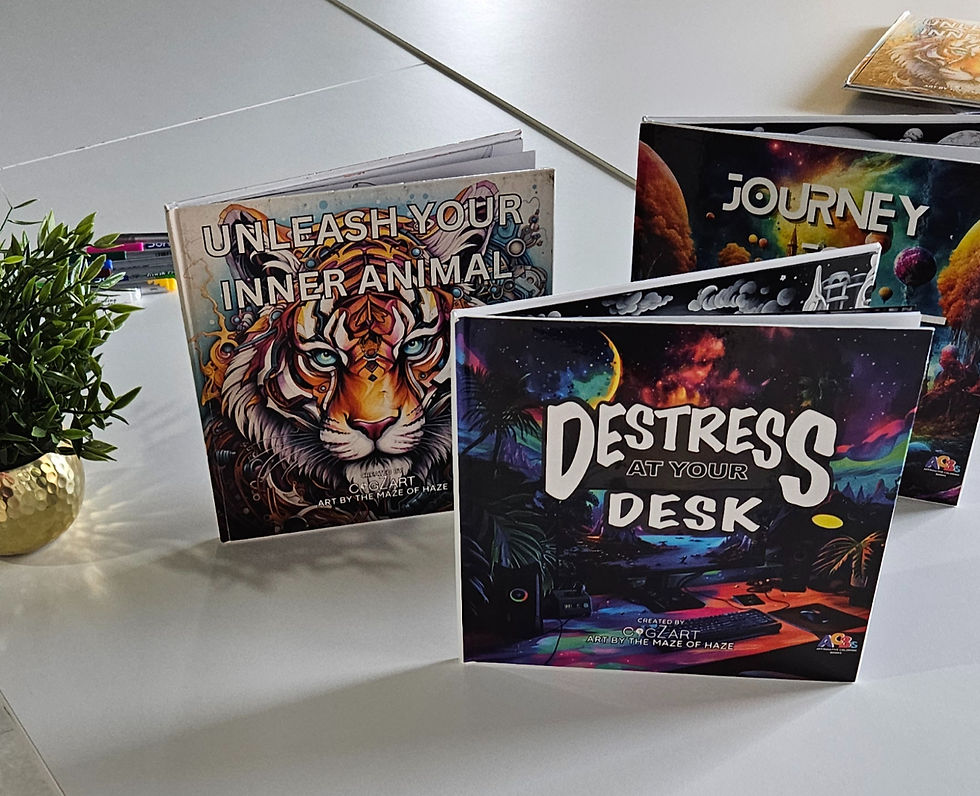
That is why ACBs can feel like a real solution for overthinking. The experience is screen-free, tactile, and visually guided, so your thoughts stop racing and start settling into color, rhythm, and quiet progress.
Why Overthinking Slows Down When the Mind Has Direction
Overthinking often comes from having too many open loops. Too many decisions. Too many unfinished thoughts competing for attention.
What helps is not silence—but direction.
When your attention is given a clear path, the mind stops searching for one.
With ACBs, the page quietly provides that path. The structure is already there in the artwork—the light, the depth, the composition. You are not deciding everything. You are responding to something that already exists.
That shift matters.
Instead of asking, “What should I think?” Your mind moves toward, “What comes next on this page?”
This is where a solution for overthinking begins to feel natural, not forced.
When Focus Replaces Mental Noise
There is a difference between distraction and absorption.
Distraction pulls you away from thoughts. Absorption gives your thoughts somewhere to settle.
As you move through a page, something changes:
Your attention narrows gently instead of jumping rapidly
Your breathing follows the rhythm of your hand
Your thoughts lose urgency because they are no longer competing
The page becomes a quiet container for your focus.
This is why we feel different from passive breaks. You are not escaping your thoughts—you are giving them a softer place to exist.
A More Personal Way to Reset
Overthinking is not the same every day. Some days feel tense. Some feel scattered. Some feel heavy.
Instead of one fixed method, the experience adapts to your state.
On certain days, you may need something structured and steady. On others, something imaginative and expansive feels more helpful.
That flexibility is what makes this solution sustainable for overthinking. It does not force your mind into calm—it meets it where it is and gently shifts it.
When the Mind Finally Feels Quieter
There is a moment that often arrives without notice.
You are no longer rushing. You are no longer analysing every thought. You are simply… present with the page.
That moment is small, but important.
Because it shows that calm is not something you chase. It is something that appears when your mind has somewhere safe to rest.
Over time, returning to this experience becomes easier. Not because your thoughts disappear, but because you know where to place your attention when they feel too loud.
Choose the ACB theme that matches your mood today and begin a page this evening for a calmer, clearer mind.
Citation: “Visual art production is associated with enhanced functional connectivity in the default mode network, which may reflect psychological resilience.”
Source: PLOS ONE
Study: How Art Changes Your Brain: Differential Effects of Visual Art Production and Cognitive Art Evaluation on Functional Brain Connectivity (Bolwerk et al., 2014)


Comments